

A Legacy Nearly 350 Years in the Making
Quaker education began in the late 17th century, when members of the Religious Society of Friends recognized that thoughtful, grounded, morally aware young people were essential to building a just and humane society.
The earliest Friends schools opened in Philadelphia in 1688—only a few decades after Quakerism itself emerged in England in the 1650s.
Origins in the Quaker Vision for Society
George Fox, the founder of Quakerism, sought a deeper truth in an era marked by religious conflict and hierarchy. His revelation—that the sacred resides within every person—became the spiritual foundation of Quaker life.
William Penn carried this vision to Pennsylvania. Believing that education was key to a flourishing society, he encouraged Quaker communities to establish schools offering “a useful education with a moral grounding.”
From Early Literacy to a Broad, Modern Education
In the 17th and 18th centuries, “useful education” meant literacy, numeracy, and practical trade skills, paired with essential virtues such as simplicity and integrity.
As the world grew more complex, so did Quaker education. Today, Friends schools understand a useful education to include:
- intellectual and creative fluency
- scientific and mathematical capability
- historical and cultural understanding
- emotional and relational intelligence
- discernment, ethical reasoning, and a commitment to justice
What remains unchanged is the purpose: helping students pursue truth, contribute to their communities, and meet the challenges of their time.
The Founding of Friends Seminary (1786)
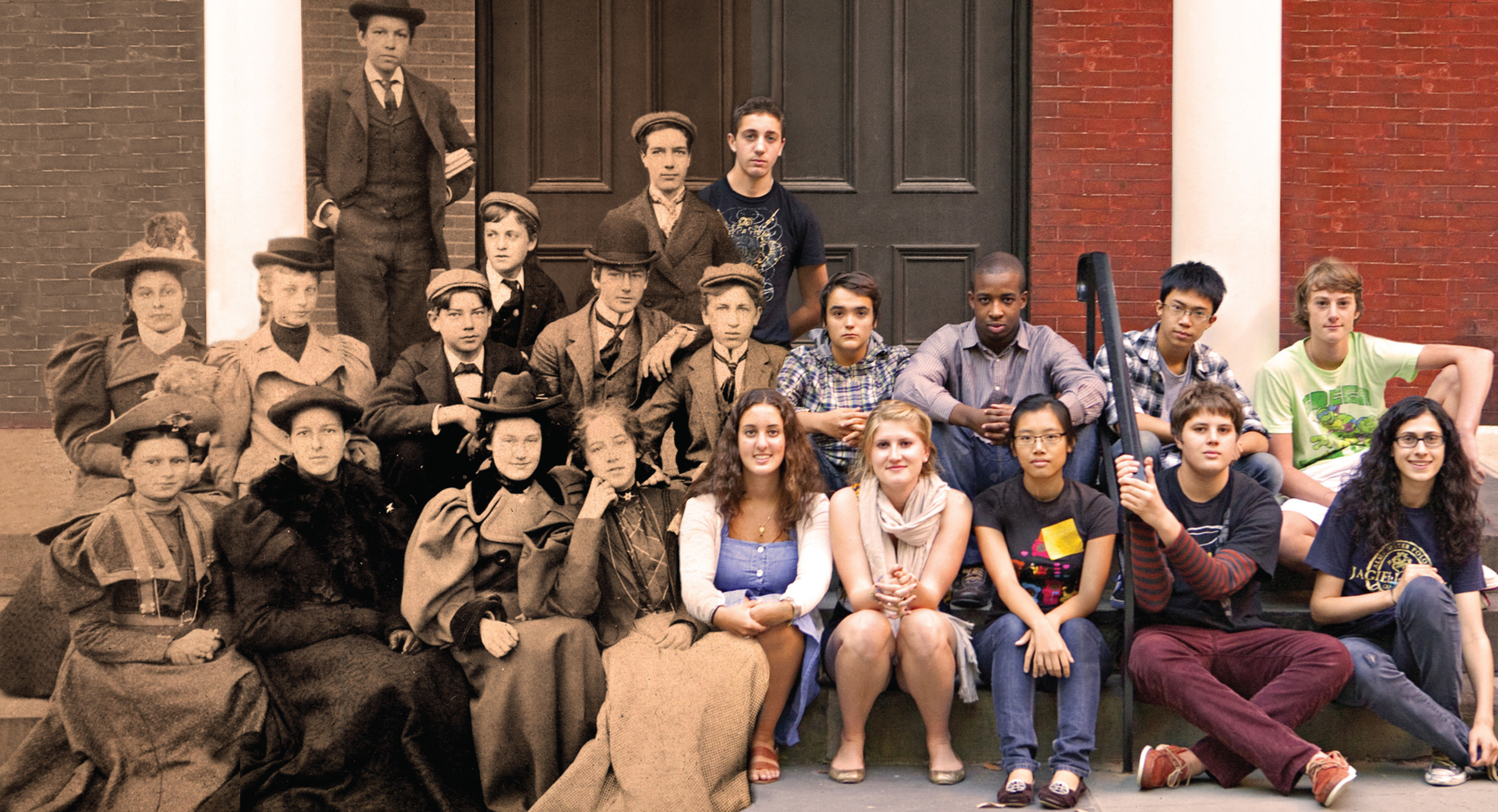
Friends Seminary was founded in Manhattan in 1786, at the dawn of the new nation. From its earliest days, the school has woven together rigorous academics with reflection, moral grounding, and a deep belief in the potential of every student.
Throughout more than two centuries, Friends has adapted to social, cultural, and political change while remaining rooted in the values that shaped its founding. Today, the school continues to evolve—guided by spirit, strengthened by tradition, and oriented toward the future.
Friends Education: A Brief History
By Rich Nourie, Friends Seminary Interim Head of School, 2025-2026
Quaker education is, incredibly, now in its fourth century in the United States, dating to the founding of the first two Friends schools in 1688 in Philadelphia. The schools date back almost to the very start of Quakerism itself in the 1650’s in England.
George Fox, the founder of Quakerism, was an earnest young man troubled by the intense sectarian Christian religious debates of his time. He wandered the English countryside wanting to know “the Truth”. His profound epiphany on Pendle Hill was that we are always in the direct presence of God, of the sacred that is always in our midst. And that, rather than rely on elaborate theologies and hierarchies of religious authorities, we had only to turn to the presence of the sacred that continually surrounds us, and that indeed lives at the heart of each of us, to know truth and live lives of generative goodness.
With its roots in Christianity, Quakerism today is widely inclusive of the contributions of many faith and wisdom traditions, but remains focused primarily on direct experience of a deeper way of knowing. In this contemplative tradition, Friends believe that we all have a fundamental element of goodness that is our most basic identity, a spiritual essence that lives within us that is a living source of strength, capacity for love and moral direction, from which we can never be separated. Grounded in that Inner Light, as Friends say, we have tremendous potential as individuals and in community to live lives of purpose, moral progress and contribution as we meet the challenges and opportunities of the age in which we live.
Early Friend William Penn brought this hopeful vision for a renewed society to his founding of Pennsylvania. Grounded in Quaker spirit, he envisioned a diverse, tolerant, peaceful and prosperous society and knew that schools would be necessary to engender this new spirit of citizenship. In the 1680’s, he put out a call to local Quaker congregations, called Meetings, to found schools with a simple mission: to provide a “useful education with a moral grounding”. What a beautifully succinct vision for schools!
At the time, a useful education consisted of basic literacy (the three R’s) and a trade. The moral grounding was basic virtues for daily living, early versions of what would become the Quaker testimonies such as simplicity, stewardship, community and integrity. It was a much simpler time in the world.
In our far more complex, interconnected and fast changing world, our sense of a useful education with moral grounding has expanded dramatically. For our students, a useful education is a complex literacy of the disciplined ways of knowing and navigating the world around us, including a sophisticated grasp of language and its uses, social and historical contexts, scientific and mathematical fluency, the arts, relational intelligence, narrative-making and continual learning. For an uncertain future, such wide and deep capability and a connection to the breadth of human potential and accomplishment, is a necessary foundation.
The basic virtues for daily living continue to be meaningful, but are extended by a clearer focus on continual discernment, a search for deeper understanding and shared truth as a foundation for action and “rightly-ordered” living, as Friends would say. This search for what is right, what is necessary and what is best animates every corner of our Friends schools today.
Friends Seminary, founded in Manhattan in 1786 at the very beginnings of our nation, is a leading and historic school in the long tradition of Friends education. It has been surrounded by and been witness to generation upon generation of change in the world, continually growing and adapting its vision for the education to best serve its students and the larger world. Today, Friends Seminary’s understanding of the weight of the challenges of this current age balanced by an ever fresh hope and sense of possibility for the world that could be, makes our school more relevant and necessary than ever. Our students grow into lives of leadership, initiative, ethical commitment, goodness and fulfillment that our founders envisioned at the very start of Friends education.
Learn more about Friends Seminary’s history as an educational leader and A School of Firsts.