Global Education Mission Statement
In keeping with our Quaker mission to “prepare students to engage in the world that is and to help bring about a world that ought to be,” a global education at Friends Seminary empowers students to lead intentional lives of meaning and impact in our complex, interconnected, and dynamic world. At Friends Seminary we guide students to engage in a culture of curiosity that encourages them to seek multiple perspectives and take courageous action for others. Through wide-ranging curricular offerings, as well as through varied co-curricular opportunities, community engagement, and purposeful local, national and international experiences, students grow the knowledge, essential skills and empathy necessary to understand and address shared global challenges.
Adopted February 2024
Global Citizenship
Friends Seminary encourages students and faculty to see themselves as active participants in shaping an ever-evolving world. The Friends Global Education Program fosters real-world engagement through strategic partnerships and immersive experiences rooted in mutual respect, cross-cultural understanding, equity, and justice.
At Friends, global education extends far beyond travel. Beginning in Lower School, students engage in curriculum and experiences that integrate culture, language, and service, laying the foundation for global citizenship. Our goal is for every student to encounter multiple meaningful global education opportunities—both locally and internationally—before they graduate.
The CPEJ team supports this mission by providing students with experiences through classroom learning, community engagement, and diversity, equity, and belonging initiatives, as well as through purposeful travel. These opportunities cultivate the knowledge, skills, and empathy students need to “help bring about a world that ought to be.”
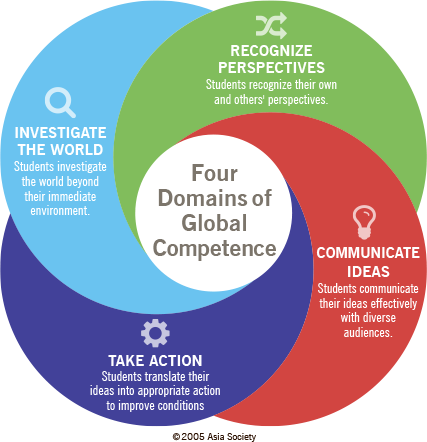
Friends Seminary’s Global Education programs are grounded in the four global competencies outlined by the United Nations’ Organization for Economic and Cultural Development. These competencies define the essential knowledge, skills, and mindsets students need to navigate and contribute to an interconnected world. At Friends, globally competent students are equipped to:
- Investigate the World – They are curious, engaged learners who seek to understand global issues and how the world functions.
- Recognize Perspectives – They acknowledge their own viewpoints while appreciating that others may see the world differently.
- Communicate Ideas – They can effectively express themselves, both verbally and non-verbally, across diverse cultural and linguistic contexts.
- Take Action – They apply their knowledge and skills to effect meaningful change in their communities and beyond.
Global Education in Each Division
Lower School
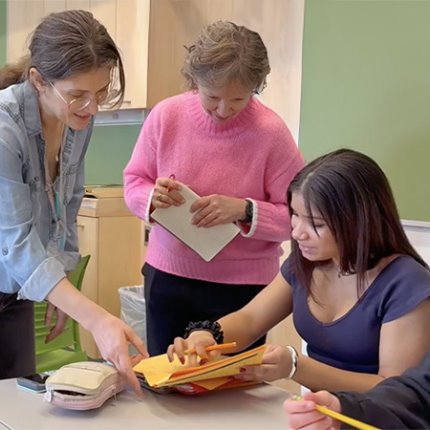
In Lower School, Global Education competencies are integrated into the curriculum in Kindergarten through Grade 4. Throughout students' explorations of reading, writing, social studies, art, dance, music and other subjects, they are encouraged to investigate the world, recognize their own and others' perspectives, communicate their ideas with a diverse audience and take appropriate action when they can.
Middle School
Global competencies are also integrated into the Middle School curriculum across disciplines. Additional programming in Middle School includes our Intercultural Student Dialogue program. Middle School Global Student Dialogues: Grade 7 & 8 students participate in intercultural dialogues with students across the globe about issues such as Climate Change, Gender Equality, Mental Health and more. Friends is a leading partner school in the Institute for Global Learning’s Global Student Dialogue program.
Upper School
Upper School students continue to learn broadly across the curriculum about the world around them, develop skills like perspective taking and respectful dialogue in their own and in other languages, they engage with global issues as lobbyists (through organizations like Friends Council on National Legislation) and through service learning and community engagement.
Upper School students also participate in Intercultural Student Dialogues on a variety of topics through a student organization dedicated to bringing dialogue and dialogue skills to the Upper School. Two of our students serve as Student Leaders of this program, helping to plan dialogue topics and formats and to facilitate these dialogues with students from across the globe.
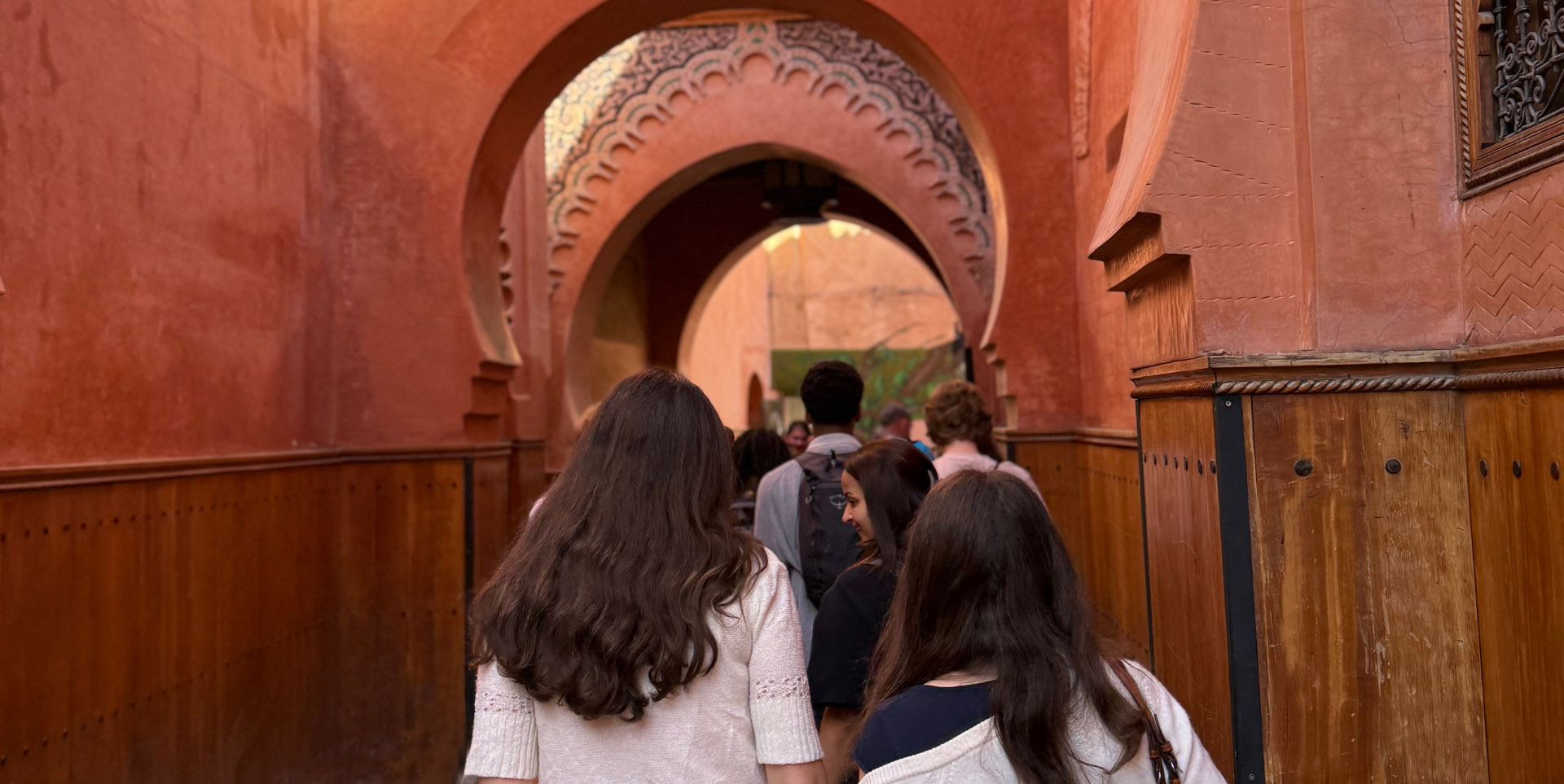
In addition, Upper School students also have opportunities to move beyond their comfort zones as they participate in purposeful, mission-driven travel immersion experiences including a Civil Rights Program in the American South, Indigenous Ways of Being in Vancouver, Windows and Mirrors program in South Africa, Crossroads of Culture in Morocco and an exploration of Sagas & Sustainability in Iceland.