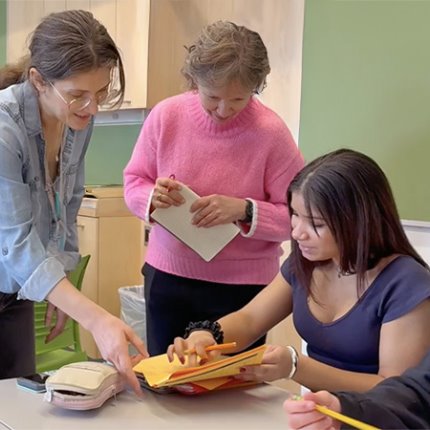
In the Lower School, service is woven into classroom learning and community-wide experiences such as the All-School Day of Service. Older students frequently collaborate with younger peers, modeling leadership and building school-wide connections. A hallmark example is the First Grade Post Office: students run a schoolwide mail delivery service, raise funds for community organizations, and then meet with members of the Upper School Service Committee to learn about nonprofits and use Quaker process to discern how to allocate the proceeds. Through projects like these, students begin to understand that small acts—rooted in empathy and curiosity—can have meaningful impact.
Middle School students build on this foundation through yearlong service and advisory-based projects. These experiences encourage students to explore social justice topics, ask deep questions, and create action-oriented responses that connect values to real-world outcomes. Each grade’s Day of Service is linked to a Quaker testimony and to core academic learning. For example, Grade 5 partners with Flushing Meeting and Bowne House, grounding their Day of Service in simplicity, Quaker history, and reflection. Students evaluate letters from these historic places, travel to them to work on beautification and repair projects, and then write descriptive letters to share with the next generation about what it was like. Through this program, they take service, history, and English out of the classroom and into practice. The program culminates with a shared Meeting for Worship with Flushing Meeting, centering students in our Quaker Values.
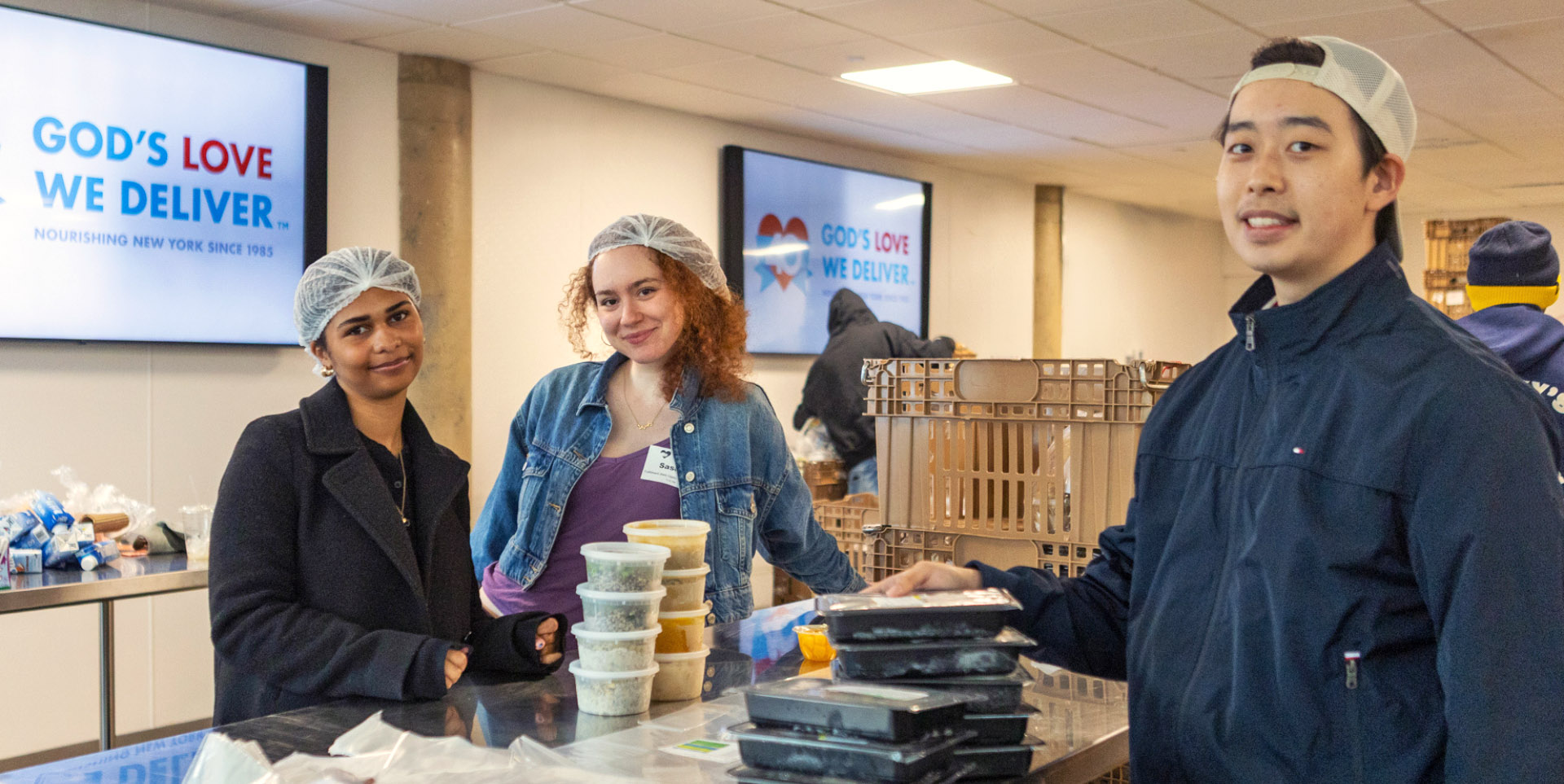
Service has been a defining value at Friends Seminary since the School’s founding. Upper School students complete 25 hours of service each year through meaningful experiences that include school service, civic engagement, service learning, guided reflection, and opportunities to learn about pressing social and environmental issues. The requirement is designed not as a checklist but as a pathway—one that encourages students to develop an enduring habit of service that continues long after graduation. To support students in fulfilling their hours, the Center for Peace, Equity and Justice (CPEJ), in partnership with the Upper School Service Committee, shares regular opportunities through the online Community Engagement Newsletter. The School’s Specialist for Community Engagement also works one-on-one with students to help them find organizations, locally and globally, that connect with their passions and interests. A powerful example of civic engagement in practice is the annual student lobbying trip to Washington, D.C. Using Quaker process, students reach consensus on an issue, explore it deeply, and advocate for change with congressional offices. It is a model of how curiosity, conviction, and community-minded action come together.