


Upper School Global Travel Programs
Hidden Voices of the Southern Freedom Movement: Building the Beloved Community
Walk across the Edmund Pettus Bridge. Stand in the sanctuary of the 16th Street Baptist Church. Hear the voices of the people—especially women and young people—whose courage, organizing, and everyday acts of resistance helped change America.
In partnership with Nobis Project, students will experience the Southern Freedom Movement through the people, places, and stories too often left out of the history books. We will explore pivotal moments including the Montgomery Bus Boycott, Freedom Rides, and Selma voting rights campaign, learning from descendants, historians, and community leaders who preserve the legacies of those who sustained the movement. By visiting the places where history unfolded, students will move beyond learning about the Civil Rights Movement to experiencing its people, places, and enduring impact. Along the way, we will celebrate the beauty, creativity, and resilience of Black communities through art, music, food, dance, and storytelling.
Highlights include the Birmingham Civil Rights Institute, Kelly Ingram Park, 16th Street Baptist Church, Edmund Pettus Bridge, Selma Interpretive Center, Montgomery’s National Memorial for Peace and Justice and Legacy Museum, and sites connected to the Freedom Rides. Our journey concludes with a joyful celebration of culture and community, exploring how music, movement, creativity, and joy can be powerful acts of resilience and resistance.
Throughout the program, we will engage in dialogue and reflection, connect the past to the present, and consider our own capacity to create change. Together, we will ask what it means to build the Beloved Community in our own time.
Our journey together will be guided by these queries:
- What can the overlooked voices of women, youth, and grassroots organizers teach us about courage, leadership, and creating lasting social change?
- How do place, memory, and lived experience deepen our understanding of history in ways that books alone cannot?
- What does it mean to build the Beloved Community today, and what responsibilities do we have in advancing justice in our own communities?
- How can we honor the legacy of the Southern Freedom Movement by transforming what we learn into lives of empathy, courage, and action?
Japan: Planting the Seeds of Peace
This immersive program invites students in Grades 9–12 on a transformative journey rooted in the Quaker testimony of peace.
Traveling through western Japan, we begin in Kyoto, exploring the country’s rich cultural heritage and traditions before turning to one of the most consequential moments in human history: the United States’ use of the atomic bomb against civilian populations in Hiroshima and Nagasaki during World War II.
In Hiroshima, students will engage deeply with the legacy of the bombing through memorial sites and conversations with Japanese elders and peace advocates, hearing firsthand accounts of survival, resilience, and hope. We will also explore the remarkable story of Floyd Schmoe, the American Quaker who devoted years to rebuilding homes in Hiroshima after the war. His life offers a powerful example of reconciliation, healing, and peace in action—and invites us to consider what it means to live the Quaker testimony of peace. As global tensions rise and nuclear weapons have again become an urgent international concern, students will consider the enduring relevance of Japan’s history and the Quaker peace testimony today.
Our journey then takes us to the Kunisaki Peninsula, where students will experience traditional crafts with local artisans, visit Futago-ji, participate in a community land restoration project, and learn from local elders and farmers. An overnight farmstay will offer an opportunity to experience traditional ways of life, build relationships with local hosts, and deepen our understanding of resilience, community, and belonging.
Throughout the program, students will engage in dialogue and reflection with one another and our hosts as we explore what it means to become thoughtful global citizens committed to building a more just, compassionate, and peaceful world.
We will grapple with these queries:
- What does peace require in the face of unimaginable violence?
- How do individuals and nations reckon with painful histories?
- What responsibilities accompany memory and reconciliation?
- What can we learn from the wisdom of elders and tradition to guide us in this moment?
- How can we use what we’ve learned to become peacemakers?
Upper School Global Education Travel Program 2025-2026
Crossroads of Culture: A Personal Reflection by Oona '27
In a sea of smiles and tears, I stood looking around me. It was the last night of what had been one of my favorite travel experiences yet. If I had told that to myself at the beginning of the program — when I had to break silence with awkward laughs, rack my brain for engaging questions that might merit more than one-word answers, felt disappointed at the group’s inability to connect — I would not have believed myself. And yet there I was, tears streaming down my face, heart full of memories I will never forget.
Morocco was my first global education trip with Friends. I went on the annual lobbying in my sophomore year, but there is quite a difference between traveling by Amtrak to Washington D.C. and boarding an eight-hour flight to Africa. Looking back, I think some of the group’s biggest bonding moments happened in transit: in buses, airports, trains. Sitting in the same place for hours on end kind of forces you to bond, and I’m glad that was an element of the program.
Click here to read Oona's full reflection on Morocco: Crossroads of Culture.
Upper School Global Education Travel Program 2024-2025
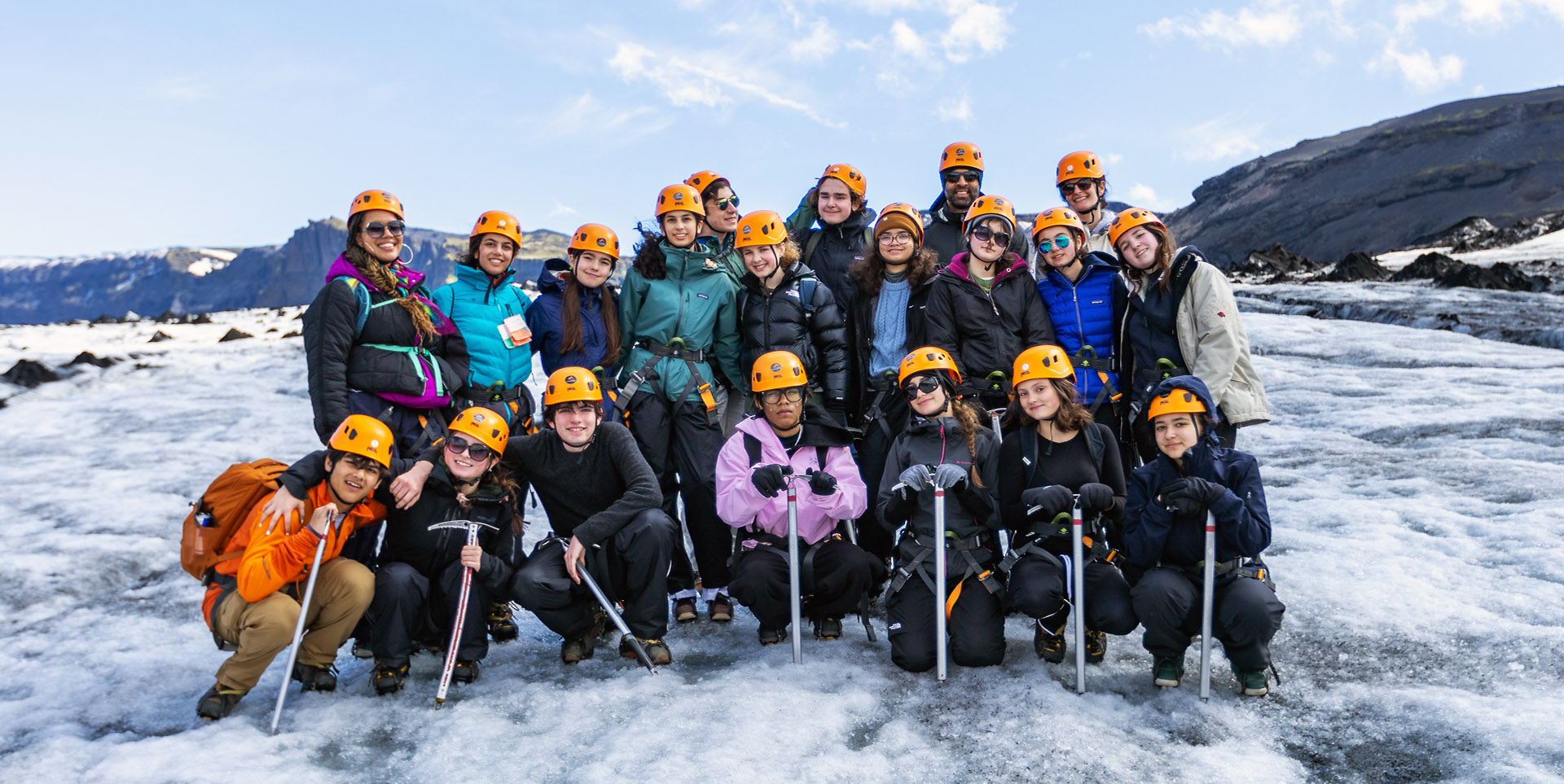
In June 2025, 18 Upper School students and three dedicated educators—Kara Kutner, Director of the Center for Peace, Equity and Justice; Kirsti Peters, Director of Diversity, Equity & Belonging; and history teacher Stephon Richardson—embarked on a powerful journey across South Africa. Designed in partnership with EDU Africa, this immersive program invited students to explore the intersections of identity, resistance, reconciliation, and shared humanity in one of the world’s most culturally and historically complex nations.
Rooted in the School’s Global Education mission, the experience empowered students to lead lives of meaning and impact by engaging deeply with diverse perspectives and global challenges. Through personal reflection, historical inquiry, and joyful cultural exchange, students nurtured a culture of curiosity, empathy, and courageous action—hallmarks of Friends’ commitment to shaping globally conscious citizens.